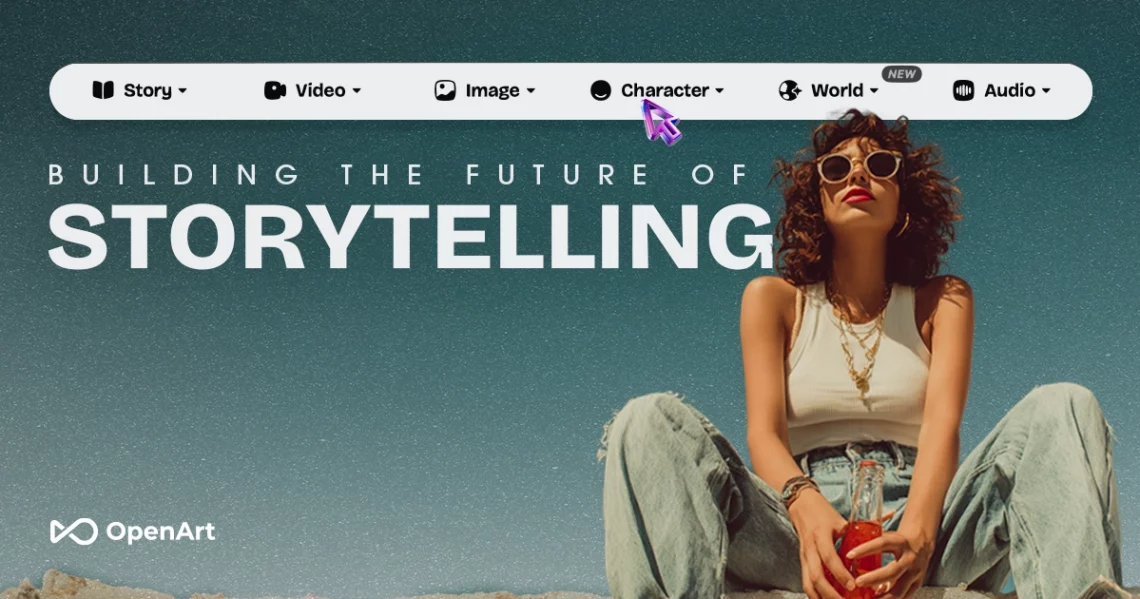
Unlocking Your Imagination: My Deep Dive into OpenArt and AI-Powered Creativity
Alright, let’s talk about something that’s totally shifted how I approach creative projects: AI art generators. For a while, I was on the fence. I’d seen the crazy stuff people were making, but I always felt like it was for „techy“ people or hardcore artists who already had a grasp on complex software. My own experience with digital art was… well, limited to doodles in MS Paint back in the day. But then I kept hearing whispers about this platform called **OpenArt**.
Curiosity eventually got the better of me. I mean, who doesn’t want to conjure up incredible images just by typing a few words? The idea of „open art“ – art that’s accessible and open to anyone – really appealed to me. I needed something intuitive, something that wouldn’t make me feel like I needed a degree in computer science just to get a decent picture. So, I bit the bullet and decided to give OpenArt a proper spin. And let me tell you, it’s been quite the ride.
My first interaction with the world of AI art was, frankly, overwhelming. I’d tried a few free tools here and there, and mostly got garbled messes or images that looked like they’d been run over by a truck. I thought, „This isn’t for me.“ But something about the vibe around OpenArt, the way people talked about its ease of use and the sheer quality of its output, made me reconsider. I finally took the leap and explored what it had to offer. If you’re anything like me, hesitant but intrigued, you might want to check it out for yourself. You can jump in right here: Visit Official Website Now.
What is OpenArt, Really? My First Impressions
At its core, OpenArt is an AI art generator. But that description barely scratches the surface. What makes it stand out for me is how it manages to combine incredible power with surprising user-friendliness. When I first landed on the site, I wasn’t bombarded with a million settings or a confusing interface. It was clean, inviting, and had clear pathways to start creating.
I remember thinking, „Okay, this is different.“ The main generation page immediately presented me with a prominent text box for my prompt, a place to select a model (which I quickly learned was key!), and options for aspect ratio. No complex sliders hidden away, no arcane terminology. It felt like they genuinely wanted people to *make* art, not just marvel at the tech behind it.
My very first prompt was something mundane, probably „a cat wearing a top hat.“ The results, even from that simple input, were miles ahead of what I’d experienced elsewhere. The cat actually *looked* like a cat, and the top hat was recognizably a top hat. It wasn’t perfect, but it was a solid starting point. And that’s where the magic of iteration really began to sink in for me.
The OpenArt Experience: My Journey into Creation
Once I got over the initial „wow“ factor of generating *anything* half-decent, I started to dig deeper. This is where OpenArt truly shines, in my opinion – its ability to empower creative exploration.
Prompting Power: Learning the Language of AI
The biggest hurdle for many in AI art is prompting. It’s like learning a new language. You have an idea in your head, but how do you convey it to a machine that doesn’t understand nuance like a human artist would? OpenArt really helped bridge that gap for me.
They have features that suggest prompts, offer variations, and even show you what prompts others used to create similar, stunning images. This was a game-changer. Instead of blindly typing and hoping for the best, I started to learn the syntax, the keywords, and the descriptors that genuinely influence the output.
For instance, I was trying to create an image for a short story I was writing – a mystical forest scene with glowing mushrooms and ancient trees. My first prompt was something like „magical forest with mushrooms and old trees.“ The results were okay, but a bit generic. Then I looked at examples in the OpenArt gallery, and saw prompts that included details like „hyperrealistic,“ „cinematic lighting,“ „dense volumetric fog,“ „bioluminescent fungi,“ and „gnarled ancient oaks.“
I re-ran my prompt, adding those specific details, and the difference was night and day. The image that came back was exactly what I had envisioned – a truly ethereal, enchanting landscape. It wasn’t just generating an image; it was teaching me how to articulate my vision more effectively. This iterative process of refining prompts based on results and community examples is incredibly addictive and educational.
Style Galore: A Universe of Aesthetics at Your Fingertips
One of the most exciting aspects of using OpenArt has been the sheer variety of artistic styles available. It’s not just about what you *describe*, but *how* you want it described. Are you looking for a photorealistic image? A dreamy watercolor painting? A gritty comic book style? An abstract explosion of color?
I’ve spent hours just playing around with different styles, applying them to the same basic prompt to see the dramatic transformations. For my forest scene, I tried a „fantasy art“ style, a „storybook illustration“ style, and even a „dark academia“ style. Each one brought a completely different mood and aesthetic to the same core concept.
This is where the „open art“ philosophy really comes through. It opens up so many avenues for creative expression without requiring you to master traditional art techniques. Suddenly, I could be a digital painter, a comic artist, or a surrealist, all from the comfort of my keyboard. This experimentation often leads to unexpected and delightful results, sparking new ideas I wouldn’t have considered otherwise.
Image-to-Image Magic: Giving My Sketches a Digital Polish
Okay, if I had to pick a favorite feature, it might just be the image-to-image generation. This was a revelation for me. I’m not a great sketch artist, but I do occasionally doodle ideas on paper. Before OpenArt, those doodles would often stay as rough sketches, never quite evolving into anything substantial.
Now, I can snap a photo of a rough drawing – let’s say, a quirky character design I quickly scribbled down – upload it to OpenArt, and use it as a starting point. I then describe what I want it to *become*: „a whimsical gnome with a glowing lantern, highly detailed, oil painting, intricate textures.“ OpenArt takes my rudimentary sketch and transforms it into something truly polished and artistic, while still retaining the core composition and idea from my original drawing.
It feels like having a personal digital assistant who can take my raw ideas and elevate them. It’s incredibly empowering, especially for someone who isn’t formally trained in art but has a head full of concepts. It’s like giving your vision a turbo boost.
Inpainting and Outpainting: Fixing and Expanding My Worlds
Another feature that’s proven invaluable in my personal use is inpainting and outpainting. Have you ever generated an image that’s *almost* perfect, but one tiny detail is off? Or maybe you love the central subject but wish the background was more expansive? That’s where these tools come in.
I had a fantastic image of a spaceship landing on an alien planet, but a small, unwanted artifact appeared near the ship’s engine. Using the inpainting feature, I simply masked that area, described what *should* be there (or just left it blank for the AI to intelligently fill), and *poof* – problem solved. It’s like having a digital eraser and brush that understands context.
Outpainting is equally impressive. I once generated a beautiful portrait of a futuristic city, but the composition felt a little cramped. With outpainting, I was able to expand the canvas, and OpenArt seamlessly generated more of the cityscape, extending buildings and adding details that logically fit with the existing image. It’s a powerful way to refine and enhance your creations, making them truly your own.
Beyond Generation: The OpenArt Community Aspect
While the creation tools themselves are fantastic, a huge part of the OpenArt experience is the community. It’s not just a standalone generator; it’s a bustling hub of creativity.
Exploring the Gallery: An Endless Well of Inspiration
One of my favorite things to do when I’m feeling a bit creatively stuck is to browse the public gallery. It’s absolutely packed with breathtaking images created by other users. This isn’t just about admiring pretty pictures; it’s a genuine learning opportunity.
Each image often displays the prompt that was used to create it, along with the model and settings. This means I can deconstruct what makes a particular image so striking and learn how to apply those techniques to my own creations. I’ve discovered new styles, prompt techniques, and even whole artistic movements I wasn’t aware of, all through the OpenArt community gallery. It’s an „open art“ library in the truest sense.
Sharing My Own Work: Connecting with Fellow Creators
It’s also incredibly satisfying to share my own creations and get feedback. There’s a real sense of camaraderie. People are generally supportive and eager to share tips and tricks. It feels less like a competition and more like a collective journey into the exciting, uncharted territory of AI art. Seeing your work appreciated, or even getting constructive criticism, helps push your own boundaries and encourages further experimentation.
Real-World Applications: Who Benefits from OpenArt?
I’ve found OpenArt to be surprisingly versatile, not just for personal creative kicks, but for practical applications too.
* **Artists & Designers:** If you’re a professional, OpenArt can be an incredible tool for brainstorming, creating mood boards, generating concept art quickly, or even mocking up different visual styles for a client presentation. It can save hours of initial sketching.
* **Bloggers & Content Creators:** This is huge for me. Instead of scrounging for stock photos that *kind of* fit my blog posts, I can generate truly custom, unique visuals. Whether it’s a header image, an illustration for a specific point, or social media graphics, the ability to create exactly what I envision is invaluable.
* **Small Business Owners:** Need unique branding elements? Custom graphics for marketing campaigns? Eye-catching product visuals? OpenArt can help you stand out without needing to hire a professional artist for every little thing, especially in the early stages.
* **Writers & Storytellers:** Like my earlier example with the mystical forest, OpenArt is fantastic for visualizing scenes, characters, or entire worlds. It helps in world-building and can even inspire new plot points.
* **Hobbyists & Enthusiasts:** And of course, for anyone who just loves to create! If you enjoy digital art, exploring new technologies, or simply want to bring your wildest ideas to life, OpenArt offers an accessible and powerful platform.
I’ve personally used it to create custom header images for some of my niche articles, and the engagement difference is noticeable. People are drawn to unique, high-quality visuals, and OpenArt delivers that in spades. My personal website and social media channels have never looked better, and it’s all thanks to the flexibility this platform offers. If you’re looking to elevate your visual content, I genuinely recommend giving it a look. Seriously, it’s worth checking out what you can do: Visit Official Website Now.
The Nitty-Gritty: What I Love and What I Think Could Be Better
No tool is perfect, but OpenArt comes pretty close for what I need. Here’s my breakdown after spending significant time with it.
The Good Stuff: Why OpenArt Stays in My Toolkit
* **User-Friendliness:** This is paramount. The interface is clean, intuitive, and designed for creators, not just tech gurus. Getting started is genuinely easy, which isn’t always the case with powerful software.
* **Quality of Results:** The images OpenArt generates are consistently impressive. With the right prompts and model selection, you can achieve truly professional-grade art. It’s not just „good for AI“; it’s good art, full stop.
* **Variety of Models & Styles:** The sheer range of models (Stable Diffusion, DALL-E, custom ones) and stylistic options means you’re rarely limited. You can go from photorealism to abstract with just a few clicks. This versatility is incredible for creative exploration.
* **Community Inspiration:** The public gallery is a goldmine. Learning from other creators, seeing their prompts, and discovering new techniques has been a major part of my growth. It fosters an „open art“ environment where knowledge is shared.
* **Feature Set:** From basic prompting to advanced controls like image-to-image, inpainting, and controlnet (for even more precise control), OpenArt offers a robust set of tools without making them feel overwhelming.
Room for Improvement: Constructive Thoughts
* **Prompt Specificity Learning Curve:** While OpenArt does a great job helping you learn, getting *exactly* what you want for *very* niche concepts can still take some trial and error. This isn’t really a flaw of OpenArt itself, but more the nature of communicating with AI. Sometimes, I wish there was even more immediate feedback on *why* a prompt didn’t yield expected results.
* **Generation Speed (Occasionally):** Most of the time, generations are quick. However, when using particularly complex models or during peak usage times, I’ve noticed rendering can take a little longer. It’s usually not a deal-breaker, but when you’re in a creative flow, every second counts!
* **Credit System Clarity:** While the credit system is fair, especially if you subscribe, newcomers might initially be a little unsure how quickly credits are consumed for different types of generations. A more prominent „this action will cost X credits“ might be helpful for first-time users before they click „generate.“
These are minor points, really. Overall, my experience has been overwhelmingly positive.
What Others Are Saying: A Glimpse into User Experiences
It’s not just me who’s loving OpenArt. I’ve seen a lot of chatter online and among my own friends who’ve tried it. Here are a few sentiments that really resonate:
* „I always wanted to illustrate my own tabletop RPG characters, but my drawing skills are nonexistent. OpenArt lets me bring them to life exactly how I imagine. It’s genuinely empowering!“ – *Sarah K., Denver, CO*
* „As a small business owner, creating eye-catching social media posts used to take me forever or cost a fortune for stock images. Now I can whip up unique graphics in minutes with OpenArt, and they perfectly match my brand’s vibe.“ – *Mark T., Austin, TX*
* „The learning curve was so much gentler than I expected. I thought AI art was for coders, but OpenArt makes it accessible. I’m having so much fun just experimenting with different styles.“ – *Jessica L., Portland, OR*
* „I use it for storyboarding my short films. Being able to visualize scenes so quickly and accurately is a game-changer for pre-production. It’s a powerful creative partner.“ – *David R., Los Angeles, CA*
These real-world examples highlight exactly what I’ve found – that OpenArt truly opens up creative avenues for a diverse range of users, regardless of their artistic background.
My Pro Tips for Getting Started with OpenArt
If you’re ready to dive in, here are a few things I’ve learned that might help you hit the ground running:
1. **Start Simple, Then Iterate:** Don’t try to cram every single detail into your first prompt. Begin with a clear subject and maybe one or two key descriptors. Generate, see what you get, then add more detail, adjust styles, or refine elements in subsequent generations.
2. **Embrace Negative Prompts:** This is huge! If you’re getting unwanted elements (e.g., blurry faces, deformed limbs, text you didn’t ask for), use the negative prompt box to tell the AI what *not* to include. Things like „ugly, deformed, disfigured, poor quality, bad anatomy, text“ are common starting points.
3. **Experiment with Models and Styles:** Don’t stick to just one. Try different base models (like specific Stable Diffusion versions) and then layer on artistic styles. Each combination will yield vastly different results.
4. **Use Image-to-Image for Control:** If you have a specific composition in mind, even a rough sketch, use the image-to-image feature. It gives the AI a strong visual foundation to build upon.
5. **Explore the Public Gallery:** Seriously, spend some time here. It’s a masterclass in prompting. Deconstruct the prompts of images you love and see how those techniques can be applied to your own ideas.
6. **Don’t Be Afraid to Remix:** OpenArt makes it easy to take an existing image (yours or someone else’s, if shared publicly) and remix it, changing prompts or styles. It’s a great way to explore variations of an idea.
Is OpenArt Right for You?
If you’ve ever had an idea for an image – a character, a landscape, a product shot, a mood piece – and wished you had the skills or tools to bring it to life, then yes, OpenArt is probably for you.
* If you’re a content creator looking for unique visuals.
* If you’re an artist seeking a powerful brainstorming partner.
* If you’re a writer wanting to visualize your stories.
* If you’re a hobbyist who loves to create and experiment.
* Or even if you’re just curious about the cutting edge of digital art.
OpenArt makes high-quality AI art accessible and enjoyable. It democratizes the creative process, truly embodying the spirit of „open art“ by allowing anyone to participate in this exciting new frontier.
Final Thoughts & My Continued Journey
Looking back at my initial hesitation, I’m genuinely glad I took the plunge with OpenArt. It hasn’t just provided me with cool images; it’s expanded my own creative thinking. I now visualize things differently, understanding how elements like lighting, style, and composition can dramatically alter an outcome. It’s like learning to see the world through a new lens, one that’s constantly generating possibilities.
It’s an incredible tool that offers a fantastic blend of power, accessibility, and community. Whether you’re a seasoned creative or a complete beginner like I was, OpenArt provides an exciting gateway into the world of AI-generated art. I’m still discovering new features and techniques, and that sense of ongoing exploration is what keeps me coming back.
So, if you’re ready to unleash your own imagination and see what kind of incredible visuals you can conjure up, don’t wait as long as I did. Dive in and start creating! You might just surprise yourself with what you can achieve.
Ready to start your own creative adventure? Head over to the official OpenArt website and give it a try: Visit Official Website Now.


Das könnte dich auch interessieren
Meine schlimmste Flugverspätung – und wie ich entschädigt wurde
My Aviator Nation Obsession: Is the Retro Vibe and Quality Worth Every Penny?