
Unlocking Digital Secrets: My Deep Dive into similarweb’s Power
Alright, let’s talk about something that’s become a bit of a secret weapon in my digital toolkit: similarweb. If you’ve been slogging through the digital landscape, trying to figure out what your competitors are doing, where your next big traffic source might be, or even just what’s trending in your industry, then you know how frustrating it can be to fly blind. For the longest time, I felt like I was constantly guessing, making strategic moves based more on gut feelings than actual data. And let me tell you, that’s a fast track to burnout.
I first stumbled upon similarweb a few years back, largely out of desperation. My own website traffic had plateaued, and I was racking my brain trying to understand why some of our competitors seemed to be growing exponentially while we were stuck. I’d heard whispers about tools that could give you insights into other websites, but I was always skeptical. „How accurate could that really be?“ I thought. „Isn’t that just… spying?“ Well, in a way, it is, but in the most ethical and entirely legal sense possible! It’s more like strategic reconnaissance.
What I quickly realized is that similarweb isn’t just a simple traffic checker. It’s a comprehensive digital intelligence platform that pulls back the curtain on virtually any website or app out there. It helps you understand where traffic comes from, what keywords are driving visitors, who the audience is, what other sites they visit, and so much more. It’s like having X-ray vision for the internet.
Before I go any further, if you’re curious to see what I’m talking about and maybe even kick the tires yourself, you can check out the official similarweb site here: Visit Official similarweb Website Now. Trust me, it’s worth a look.
My Journey with Similarweb: A Personal Anecdote
My initial dive into similarweb was driven by pure competitive curiosity. We were in a niche where a new competitor had popped up seemingly out of nowhere and was gaining traction at an alarming rate. We couldn’t figure out their secret sauce. Was it their content? Their ads? Their social media? We were completely in the dark.
I remember my first real „aha!“ moment. I plugged their domain into similarweb, and within seconds, a dashboard populated with a wealth of information. I could see their estimated total visits, their bounce rate, how long people were staying on their site, and most importantly, their traffic sources. It wasn’t just a vague „search“ or „social.“ similarweb broke it down: percentage from organic search, paid search, social media platforms, direct traffic, referrals, and even display ads.
Deeper Dive: Beyond the Basics
What truly blew me away was digging into the *referrals*. This competitor was getting a significant chunk of their traffic from a few specific industry forums and a couple of lesser-known blogs. This wasn’t something we would have ever found through traditional competitive research. It gave us an immediate, actionable insight: these were communities where our target audience was already active, and our competitor had clearly figured out how to tap into them. We adjusted our strategy, focusing on engaging with those communities, and guess what? Our traffic started to climb.

That was just the beginning. Over time, similarweb became indispensable for a whole host of tasks:
* **Competitor Analysis (My Go-To):** This is where I spend a lot of my time. Beyond traffic sources, I use it to see what keywords my competitors are ranking for (both organic and paid). It helps me identify content gaps we might have, or even understand which paid campaigns they’re investing heavily in. I’ve even used it to spy on their top-performing pages – knowing what content resonates with *their* audience helps inform *my* content strategy. It’s like peeking into their playbook.
* **Keyword Research:** Forget just generic keyword tools. similarweb allows me to see the keywords *actual websites* are getting traffic from. I can explore emerging keywords in an industry or find long-tail gems that competitors might be overlooking. It helps me understand search intent in a much more practical way.
* **Affiliate Marketing/Partnership Scouting:** When I’m looking for potential partners or affiliates, similarweb is a godsend. I can quickly assess the traffic volume and audience demographics of potential partners, ensuring they align with our goals. No more blindly reaching out to sites that might not have the reach we need.
* **Content Strategy:** Sometimes, you just hit a wall with content ideas. I use similarweb to analyze top-performing content across our industry, seeing what articles or topics are driving the most engagement for other players. This helps me brainstorm fresh angles and ensure our content isn’t just good, but also relevant and data-driven.
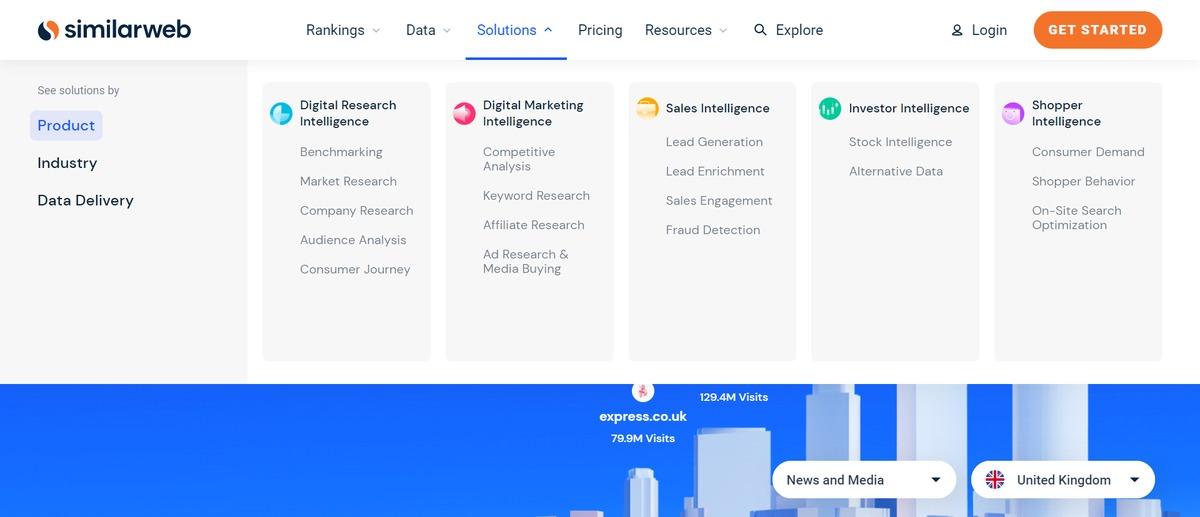
* **Sales Intelligence:** This one might surprise you, but if you’re in sales, similarweb can be a game-changer. Imagine you’re about to pitch a potential client. What if you could see their current digital performance? Understand their main traffic channels? Identify their key competitors? This kind of insight allows for incredibly personalized and informed outreach, making you look like an absolute genius. I’ve used it to walk into meetings with a clear understanding of a prospect’s digital footprint, tailoring my pitch to their specific needs and showing them how we can help improve their numbers – numbers I got from similarweb!
* **Market Research:** Beyond individual websites, similarweb allows you to look at entire industries. You can see overall market trends, identify rising stars, or even understand the global reach of different sectors. This is invaluable for strategic planning and identifying new opportunities.
Key Features I Can’t Live Without
Let’s zoom in on a few specific features that I find myself going back to again and again:
* **Website Analysis:** This is the core. You put in a URL, and similarweb gives you an incredible overview. Total visits, average visit duration, bounce rate, pages per visit – these are your key engagement metrics. Then it dives into geography, showing you where a site’s visitors are coming from globally. The traffic sources breakdown is crucial, as mentioned, but then it goes deeper into individual search keywords, specific referring sites, social media platforms driving traffic, and even what display ads a site is running. It’s truly comprehensive.
* **Industry Analysis:** Instead of looking at one site, you can analyze an entire industry category. Want to see the top players in „eCommerce – Fashion“? similarweb will show you, along with their market share trends, growth rates, and collective traffic sources. This is perfect for understanding the competitive landscape and spotting emerging threats or opportunities.
* **Keyword Research Tool:** This isn’t just for checking search volume. It lets me see which websites are ranking for specific keywords, providing context that traditional keyword tools often lack. I can analyze a keyword’s „difficulty“ not just based on theoretical metrics, but by seeing the strength of the actual sites currently dominating those results. It helps in formulating both organic SEO and paid ad strategies.
* **Sales Intelligence (More Detail):** This module is fantastic for lead generation and qualification. You can find companies based on their digital footprint – maybe you’re looking for fast-growing companies in a specific sector, or businesses that are heavily investing in paid search. similarweb can help you pinpoint them, giving your sales team a much more targeted list of prospects. It’s about working smarter, not harder.
Real Talk: What Others Are Saying
It’s not just me who’s been singing similarweb’s praises. I’ve talked to many colleagues and friends in different industries who rely on it daily. Here’s a snapshot of what some of them have shared:
* „Before similarweb, our competitive analysis was mostly guesswork and a lot of manual digging. Now, I can see exactly where our rivals are getting their traffic, what campaigns they’re running, and even what content resonates with their audience. It’s cut down our research time by half and made our marketing strategy so much sharper.“ – *Sarah L., Head of Digital Marketing*
* „As a salesperson, I used to cold call based on company size or industry. With similarweb, I can identify prospects who are actively growing their digital presence, or who might be struggling in a particular area. It gives me talking points and a deeper understanding of their business before I even make the first call. My conversion rates have definitely improved.“ – *Mark T., Enterprise Account Executive*
* „I run a small content agency, and coming up with fresh, high-performing content ideas is always a challenge. I use similarweb to see what topics are trending in various niches and what articles are driving the most traffic for popular blogs. It’s like having a crystal ball for content strategy, ensuring we’re always writing about what people actually want to read.“ – *Jessica P., Content Strategist & Agency Owner*
* „We’re constantly evaluating new markets and potential investments. similarweb provides a fantastic top-down view of industries, helping us identify market leaders, disruptors, and overall growth trends. It’s a crucial part of our due diligence process.“ – *David K., Investment Analyst*
Is Similarweb Right for You?
So, after all this, you might be wondering, „Is this tool for me?“ In my experience, if you’re involved in anything digital – and let’s face it, who isn’t these days? – similarweb can offer immense value.
It’s particularly powerful for:
* **Marketers:** Understanding competitors, refining SEO strategies, optimizing paid campaigns, finding new traffic channels.
* **SEOs:** Deep diving into keyword performance, identifying link-building opportunities, technical audits based on competitor insights.
* **Sales Professionals:** Lead generation, prospect qualification, personalized outreach.
* **Product Managers:** Understanding market demand, competitive product analysis, identifying feature gaps.
* **Investors/Business Strategists:** Market research, trend analysis, competitive intelligence for strategic planning.
* **Content Creators:** Topic ideation, content gap analysis, understanding audience interests.
* **Business Owners:** Gaining an overview of their market, understanding their online presence relative to competitors, making informed strategic decisions.
Now, a quick note on expectations. similarweb isn’t a magic wand, and like any powerful tool, there’s a bit of a learning curve. The free version offers a taste, but the real power comes with their paid plans. The data, while incredibly robust and constantly refined, is an estimate (as all third-party data collection is). However, it’s widely regarded as one of the most accurate and comprehensive tools on the market. The insights it provides are invaluable, even if the exact numbers might fluctuate slightly. It’s about the trends and the relative performance, which it nails.
If you’re ready to stop guessing and start making data-driven decisions that can genuinely impact your digital growth, then I wholeheartedly recommend exploring similarweb. You can take the next step and learn more right here: Visit Official similarweb Website Now.
My Workflow with Similarweb
Let me walk you through a typical scenario of how similarweb fits into my daily or weekly workflow.
Let’s say a new project lands on my desk: „Figure out how to increase traffic to our new service page by 20% in the next quarter.“
1. **Initial Scan:** First, I’ll go into similarweb and analyze our own service page’s domain. Where is our current traffic coming from? What keywords are we ranking for? Are there any obvious gaps or underperforming channels?
2. **Competitor Identification:** Next, I’ll identify 3-5 top competitors in that service area. I’ll run each of their domains through similarweb’s Website Analysis.
3. **Insight Generation:** This is where the magic happens.
* I look at their **traffic sources**: Are they crushing it on social media where we’re weak? Are they getting a ton of referral traffic from industry blogs we haven’t considered?
* I dive into their **top keywords (organic and paid)**: Are there high-volume, relevant keywords they rank for that we’re missing? What ad copy are they using that seems effective?
* I check their **audience demographics and interests**: Does their audience overlap with ours, or are they reaching a slightly different segment we could target?
* I review their **top pages**: What content is driving the most engagement for them? This gives me ideas for new blog posts, videos, or even improvements to our own service page copy.
4. **Strategy Development:** Based on these insights, I can formulate a concrete action plan. For instance:
* „Competitor X gets 30% of their traffic from Pinterest. We need to develop a Pinterest strategy.“
* „Competitor Y ranks for ‚best [service] providers‘ on Google. We need to create a comparison guide and optimize for that keyword.“
* „Competitor Z is running display ads on these three niche websites. Let’s explore advertising there.“
This structured approach, driven by the data from similarweb, turns what used to be a daunting task into a series of actionable steps. It replaces guesswork with informed decisions.
Things I Appreciate
Beyond the raw data, there are aspects of similarweb that really stand out to me:
* **Data Accuracy (for estimates):** While no third-party tool can give you exact Google Analytics numbers for another site, similarweb’s estimations are remarkably consistent and reliable. What’s more important than the exact number is the relative performance and trends, which it captures exceptionally well. You can trust its directionality.
* **User Interface:** When I first started, it felt a little overwhelming because there’s so much data. But the interface is actually very intuitive once you get the hang of it. Dashboards are clean, data visualizations are clear, and filtering options allow you to quickly zero in on what you need.
* **Breadth of Data:** This isn’t just about traffic. It’s about engagement, audience, geography, keywords, ad networks, social media, apps… the sheer scope of data available is what makes it so powerful. It’s a holistic view of the digital world.
* **Time-Saving:** Seriously, how much time would it take to manually gather even a fraction of this data? similarweb condenses hours, if not days, of research into minutes. It frees you up to focus on strategy and execution, rather than endless data collection.
A Final Thought
In the fast-paced, ever-evolving digital landscape, flying blind is simply not an option anymore. Whether you’re a seasoned marketer, a startup founder, a diligent salesperson, or just someone trying to understand what makes websites tick, similarweb offers a window into insights that were once only available to the biggest players with massive budgets. It levels the playing field, giving you the intelligence you need to make smarter, more impactful decisions.
It’s been an absolute game-changer for me, turning educated guesses into strategic plays based on solid data. If you’re serious about understanding your market, your competitors, and your own digital footprint, then similarweb is a tool you absolutely need to explore.
Don’t just take my word for it; dive in and see for yourself what kind of digital secrets similarweb can unlock for your business. You might be surprised at what you discover.
Ready to gain that competitive edge? Click here to visit the official similarweb website and explore their offerings: Visit Official similarweb Website Now.


Das könnte dich auch interessieren
Unlocking Value: My Deep Dive into Joe’s New Balance Outlet Deals

My Deep Dive into Omaha Steaks: A Home Cook’s Unfiltered Take on Their Legendary Meats