Cracking the Digital Code: My Journey and Deep Dive with Similarweb
Hey everyone! So, let’s talk about something that’s genuinely changed the game for how I approach anything online, whether it’s my personal blog, a small freelance project, or even just understanding what makes certain websites tick. I’m talking about Similarweb. If you’ve ever felt like you’re trying to navigate the digital world blindfolded, constantly guessing what your competitors are doing, or wondering where your potential audience actually hangs out, then you’re probably going to want to stick around for this.
For years, I’ve been dabbling in various corners of the internet – building small websites, trying my hand at content creation, even helping a few local businesses with their online presence. And for just as many years, I’ve been plagued by the same frustrating question: „How do they do that?“ How do some sites seem to just *know* what people want? How do they pull in massive traffic while others languish? It often felt like everyone else had access to some secret decoder ring, and I was just… not in the club.
My Journey with Similarweb: The Problem It Solved
I remember distinctly a period a couple of years back. I was working on a niche content site, pouring hours into creating what I thought was fantastic content. I was following all the „best practices,“ or so I thought. But my traffic numbers were stagnant. My competitors, meanwhile, seemed to be on a rocket ship. I was tearing my hair out trying to figure out what I was missing. Was it my keywords? Was it where I was promoting my content? Was their audience just different? I had no real way of knowing.
It was during this time, utterly frustrated and ready to throw in the towel, that a friend in digital marketing casually mentioned, „Have you ever just looked up their sites on Similarweb?“ My initial thought was, „Similar-what now?“ I’d heard whispers of tools that could give you insights, but I always imagined them to be insanely expensive, incredibly complex, or just plain unreliable. But I was desperate, so I decided to check it out. And let me tell you, that was the moment the blindfold started to come off.
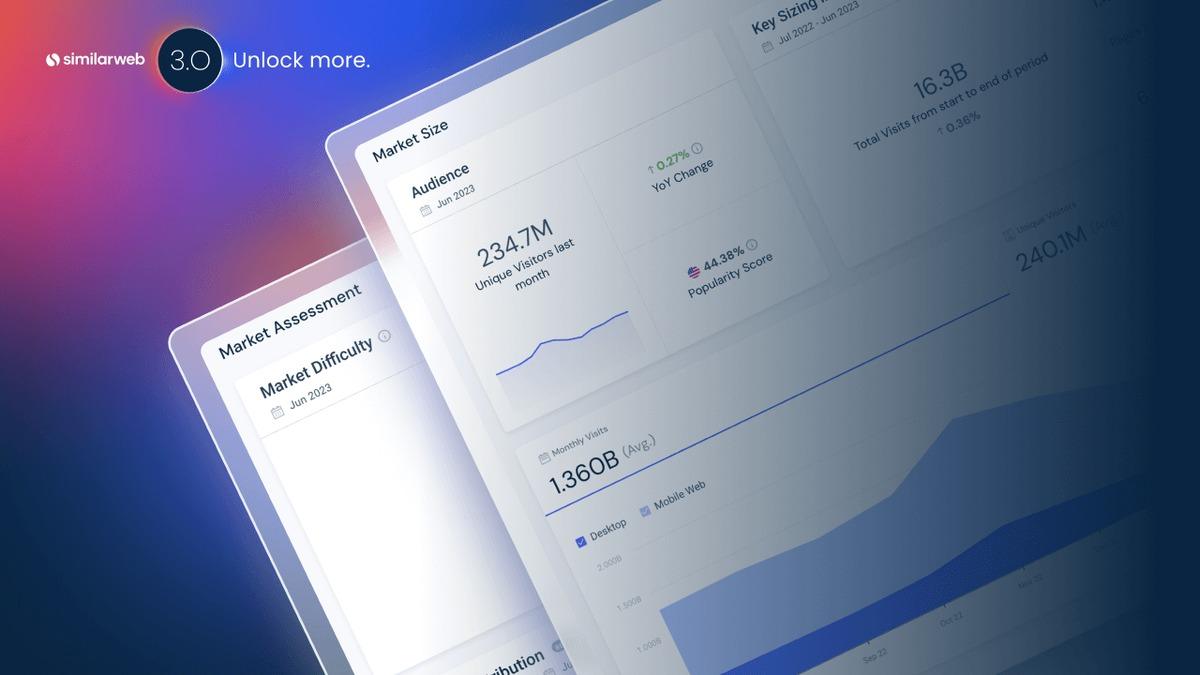
What I found wasn’t just a tool; it was an entire framework for understanding the digital landscape. Similarweb isn’t just about traffic numbers; it’s about the *story* behind those numbers. It paints a picture of user behavior, competitive strategies, market trends, and so much more. It gave me the kind of clarity I’d been craving for years. It felt like I finally had that secret decoder ring, and the digital club was suddenly within reach. I started to use Similarweb not just for my projects but for any time I wanted to understand an industry or a potential partner better. It became my go-to for market intelligence.
Key Features That Blew My Mind (and How I Use Them)
Okay, so let’s get into the nitty-gritty. What exactly does Similarweb do that makes it so indispensable for me? It’s got a suite of features, and while I don’t use every single one every day, the core offerings are incredibly powerful. I’ll walk you through some of the ones that I personally rely on the most.
Website Analysis: Peeking Behind the Digital Curtain
This is probably where most people start with Similarweb, and for good reason. You can literally plug in any website URL and get a deep dive into its performance. Think about that for a second. You can see estimated traffic, engagement metrics (like bounce rate, pages per visit, average visit duration), and, crucially, where that traffic is coming from. Is it organic search? Social media? Referrals? Paid ads?
For my own content site dilemma, I plugged in my top competitors. Immediately, I saw that one competitor, who seemed to be dominating, was getting a huge chunk of their traffic from a specific social media platform I wasn’t even touching. Another was crushing it with display ads on particular sites. It wasn’t just numbers; it was *actionable intelligence*. I could then tailor my strategy to explore those exact channels. It was a game-changer for understanding where I needed to focus my efforts instead of just blindly creating content.
If you’re curious to see how your own site, or maybe a competitor’s, stacks up, you absolutely need to check it out. It’s truly eye-opening.
Visit Official similarweb Website Now
Keyword Research: Unlocking Search Secrets
Beyond just looking at entire websites, Similarweb also offers incredible tools for keyword research. This isn’t just about finding high-volume keywords; it’s about understanding the *intent* behind those keywords, seeing what your competitors rank for, and discovering untapped opportunities. I’ve used it to pinpoint long-tail keywords that my bigger competitors overlook, giving me a chance to rank for specific, highly engaged queries.
I remember one specific instance where I was trying to optimize an article about sustainable living. I had my initial list of keywords, but after plugging them into Similarweb and looking at related terms and what top-ranking sites were also targeting, I discovered a whole cluster of phrases around „zero-waste home products“ that I hadn’t considered. Not only did these have decent search volume, but they also had lower competition. My own blog posts, after incorporating these insights, saw a noticeable bump in organic traffic. It was like having a cheat sheet for what people were actually searching for in my niche.

Competitor Analysis: Staying Ahead of the Game
This is where Similarweb truly shines for competitive intelligence. You’re not just looking at one website in isolation; you’re comparing your performance (or a target site’s performance) against direct competitors. You can stack up traffic, engagement, audience demographics, and even their marketing channels side-by-side. This capability alone has been invaluable for me, helping me understand exactly why one company might be pulling ahead of another.
My friend Sarah, who runs a boutique e-commerce store, told me, „Before Similarweb, I was just guessing why my competitors were doing so well. Now, I see their traffic sources, their ad spend, their top-performing products – everything. It’s like having x-ray vision into their strategy! It’s completely changed how I plan my promotions and even my product sourcing.“ This echoes my own sentiments perfectly. It’s not about copying, it’s about understanding the landscape and finding your own unique edge.
Industry Trends & Market Research: Seeing the Bigger Picture
Sometimes you need to zoom out a bit. It’s not just about individual websites or keywords, but about the entire industry you’re operating in. Similarweb lets you explore entire industries, see top players, growth trends, and emerging technologies. This is fantastic for identifying new opportunities, understanding market saturation, or even justifying a new business venture to stakeholders.
I once used this feature when contemplating a new venture into the pet care niche. Instead of going in blind, I could see which segments were growing the fastest (e.g., eco-friendly pet products vs. traditional supplies), which brands were dominating, and what their traffic patterns looked like over time. It gave me a much more informed perspective than just relying on generic market reports. It helped me decide where to focus my initial efforts and where to perhaps avoid due to high competition or dwindling interest.
Visit Official similarweb Website Now
Audience Insights: Who Are You Really Talking To?
This is a big one. You might think you know your audience, but Similarweb can often surprise you. It provides granular data on demographics (age, gender), interests, and even other websites your audience visits. This is gold for content creators, marketers, and product developers alike. Understanding your audience beyond surface-level assumptions can lead to vastly more effective strategies.
I saw a comment in a Facebook group from a fellow content creator saying, „I used Similarweb to really dig into my audience demographics, and it completely changed my content strategy. I was targeting the wrong age group without even realizing it! I thought my audience was primarily young adults, but the data showed a significant segment of older, more affluent users who were interested in different sub-topics. It made me completely re-think my approach to topics and tone.“ This resonates with my own use of the tool. It challenges your preconceptions and gives you the data to back up new directions.
Advertising Intelligence: Where Are They Spending Their Money?
Ever wondered how your competitors are running their paid campaigns? Similarweb has an advertising intelligence feature that can show you where competitors are running display ads, what publishers they’re working with, and even some of their top-performing ad creatives. This is invaluable for refining your own ad strategy, discovering new ad networks, and avoiding costly mistakes.
I’ve used this to identify specific websites where competitors were running ads that I hadn’t considered. It allowed me to broaden my targeting for client campaigns and often found lower-cost, high-converting placements that were previously off my radar. It’s a huge time-saver compared to trial-and-error.
App Analysis: Mobile Matters, A Lot
If you’re in the mobile space, or even if your audience primarily accesses your content via mobile, Similarweb’s app analysis is a lifesaver. It provides insights into app downloads, usage, engagement, and even top keywords in app stores. This is critical for anyone developing an app or trying to understand the mobile market dynamics.
Just last week, I was chatting with a small app developer who said, „Trying to figure out app performance in our niche was a black box. Similarweb opened it right up, showing us what was trending, what keywords users were searching for, and even competitor app features. Absolutely vital for our growth strategy.“ For anyone in the app world, this data is incredibly powerful.
What I Really Liked (The Good Stuff)
Beyond the individual features, there are a few overarching things about Similarweb that have genuinely impressed me:
- Depth of Data: The sheer volume and granularity of data available are incredible. It’s not just surface-level; you can really drill down into specifics.
- User Interface: For a tool that handles so much data, the interface is remarkably clean and intuitive. It’s easy to navigate, and the visualizations make complex data digestible.
- Actionable Insights: This isn’t just data for data’s sake. Almost every report I pull from Similarweb gives me specific, actionable ideas for my own projects or for clients.
- Competitive Edge: It truly levels the playing field. Small businesses and content creators can gain insights that were previously only accessible to massive corporations with huge research budgets.
- Reliability: While all data estimates have a margin of error, Similarweb’s data consistently feels robust and aligns well with other metrics I track.
A Few Things to Consider (Room for Improvement, or Just Expectations)
No tool is perfect, and Similarweb is no exception. Here are a couple of things to keep in mind:
- Learning Curve: While the UI is good, there’s a lot of data. It takes a little time to understand all the reports and how to best interpret them. Don’t expect to be an expert in an hour.
- Pricing for Small Businesses: Similarweb offers various plans, and while there’s a free version with limited data, the full power comes with paid subscriptions. For a very small, bootstrapped business, the cost might be a significant consideration. However, I view it as an investment that pays for itself many times over in saved time and better decision-making.
- Data Accuracy (Estimates): It’s important to remember that for most sites, Similarweb provides *estimates* of traffic and other metrics. They’re incredibly sophisticated estimates, but they’re not always exact internal analytics. For most purposes, however, they are more than sufficient and often very close.
Is Similarweb Right for *You*? My Final Take
So, after all that, who do I think Similarweb is for? Frankly, almost anyone who has an online presence or is trying to understand the digital world better. Specifically:
- Digital Marketers: Essential for campaign planning, competitor benchmarking, and market research.
- SEO Specialists: Invaluable for keyword research, competitive keyword analysis, and content strategy.
- Content Creators & Bloggers: Discover what content performs well, where your audience hangs out, and find new topic ideas.
- E-commerce Store Owners: Understand competitor strategies, identify trending products, and optimize your marketing channels.
- Business Owners & Entrepreneurs: Market research for new ventures, competitive intelligence, and strategic planning.
- Analysts & Researchers: A powerful tool for understanding market dynamics and industry trends.
In my experience, Similarweb has gone from a „nice to have“ to an „absolute must-have“ in my toolkit. It gives me the confidence to make data-driven decisions rather than relying on gut feelings or outdated information. It’s an investment, yes


Das könnte dich auch interessieren

Thahab: My Personal Deep Dive into Luxury Fashion & Shopping Experience

sailwithus: Dein Ticket ins Seglerglück? Mein Abenteuer auf hoher See!